Wild Studio Day 1 - Foraging and making charcoal and pens
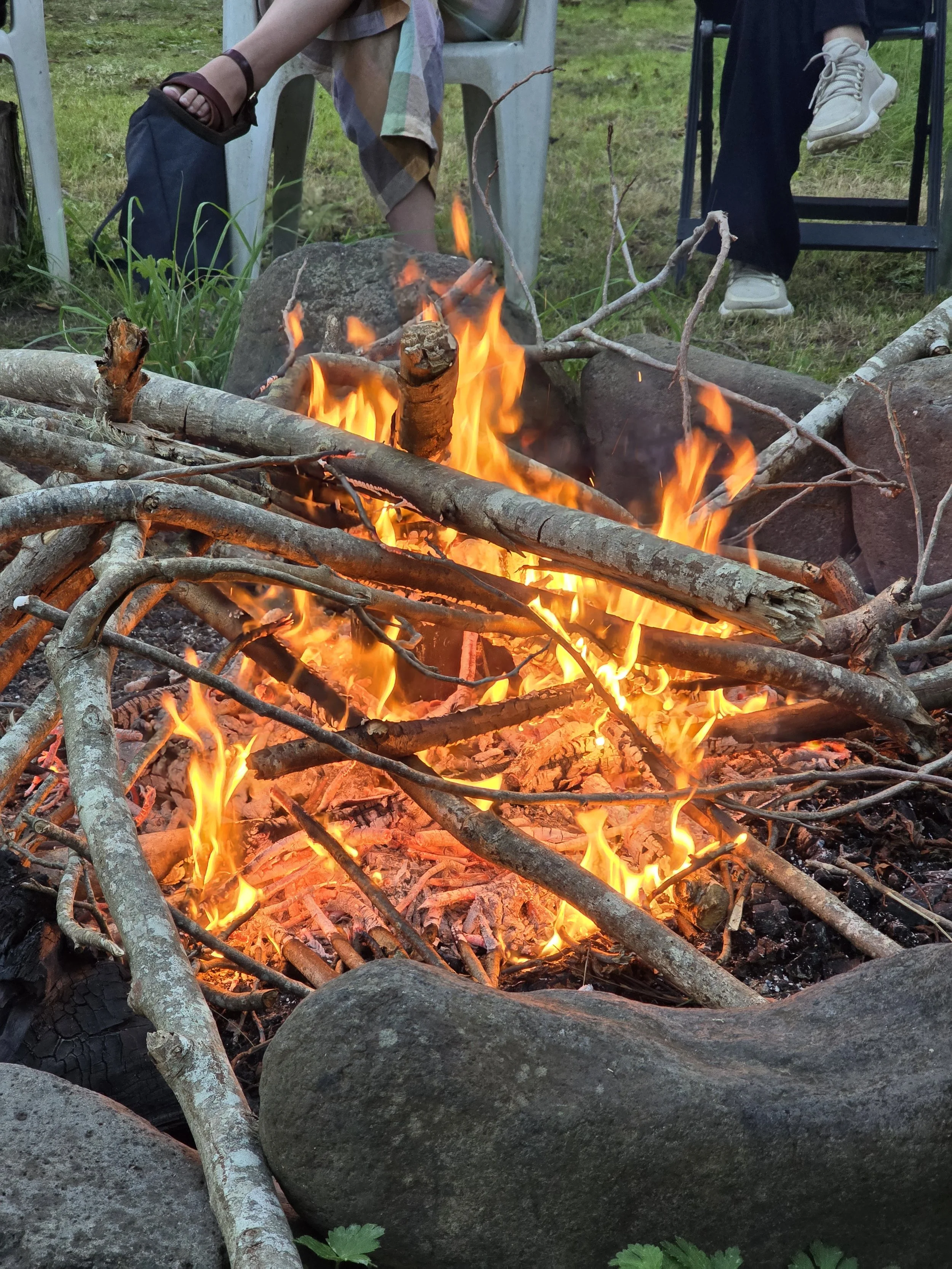
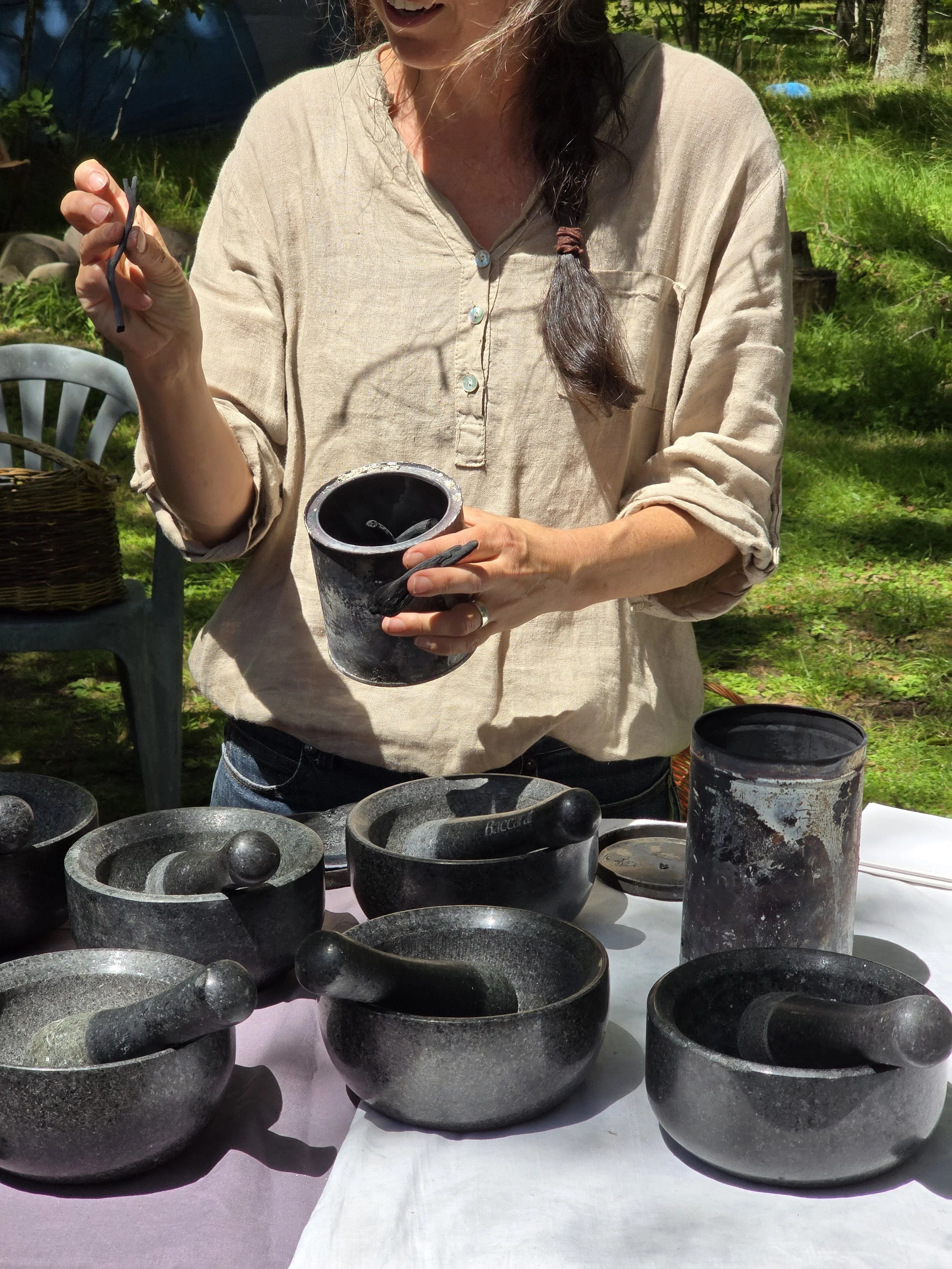
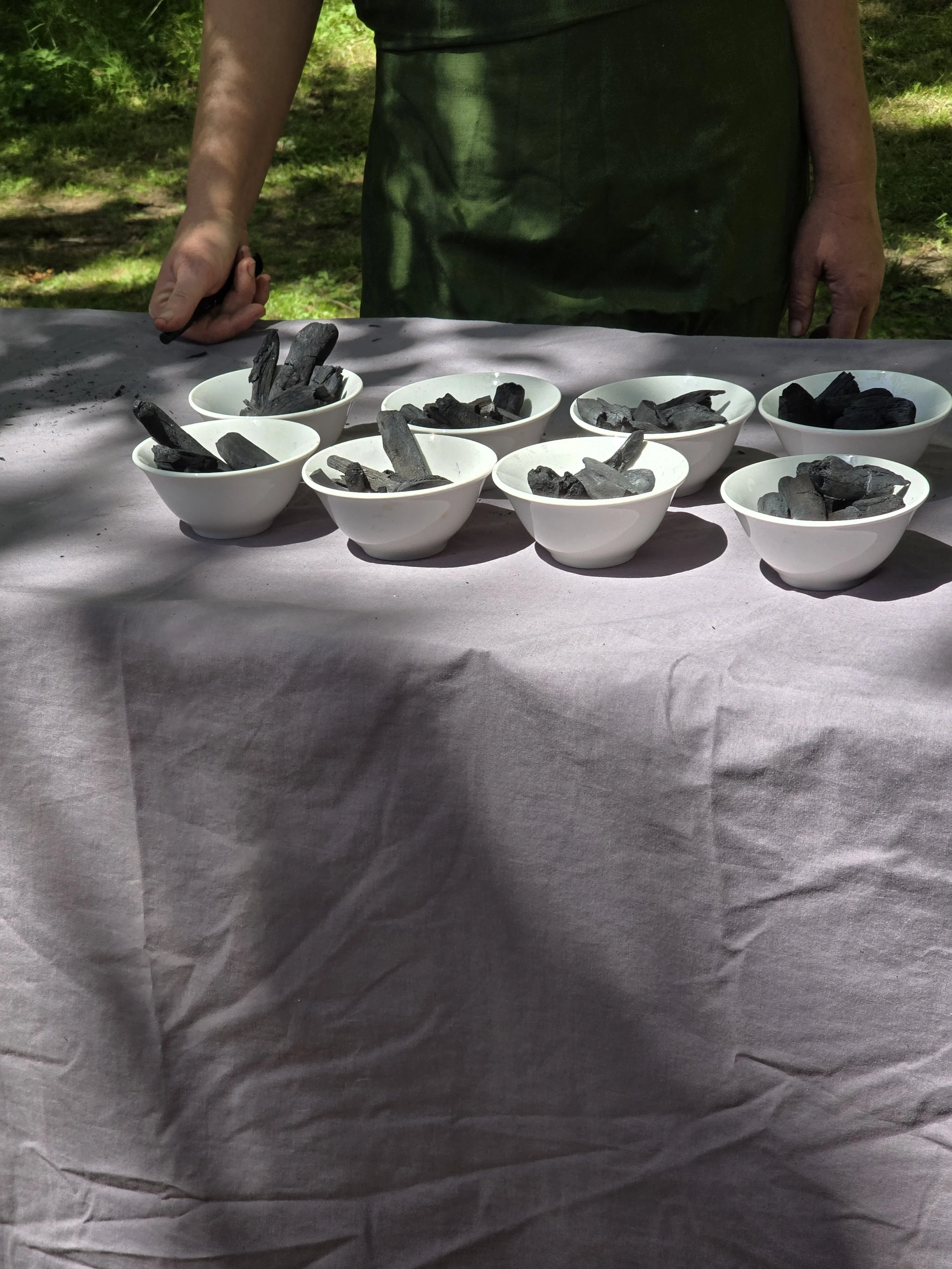
The process order was very carefully thought out. The first day we foraged for alder and willow slips to make charcoal from. These we packed into tins with close fitting lids and a hole in the top so excess steam could escape. The tins were then immersed in a dry brush fire and fired for about an hour before raking them out of the first and allowing to cool. We also used some small pieces of driftwood in a tin treated similarly so that these could be ground down to powder, whereas the charcoal sticks would be used to draw direct with.
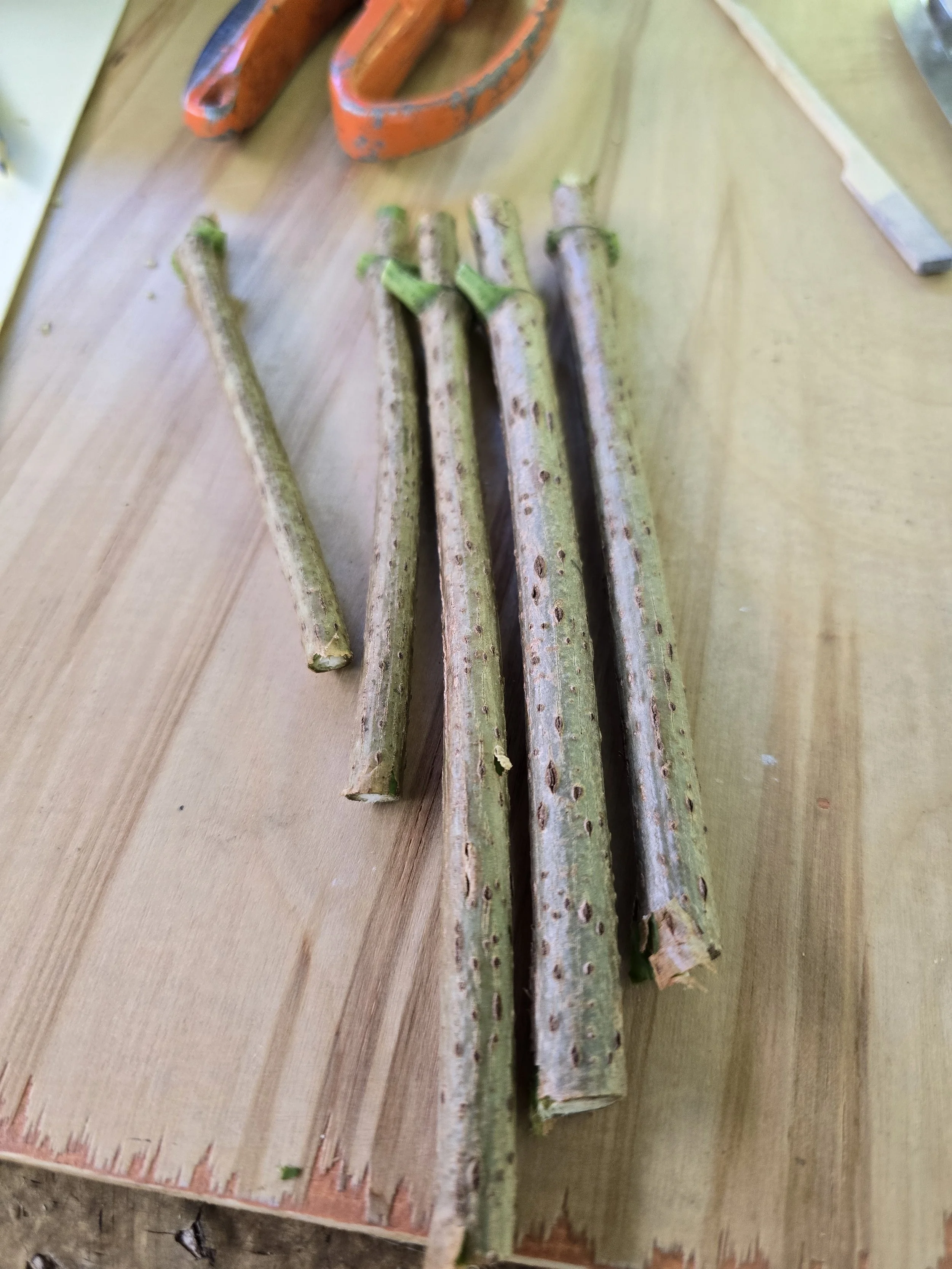
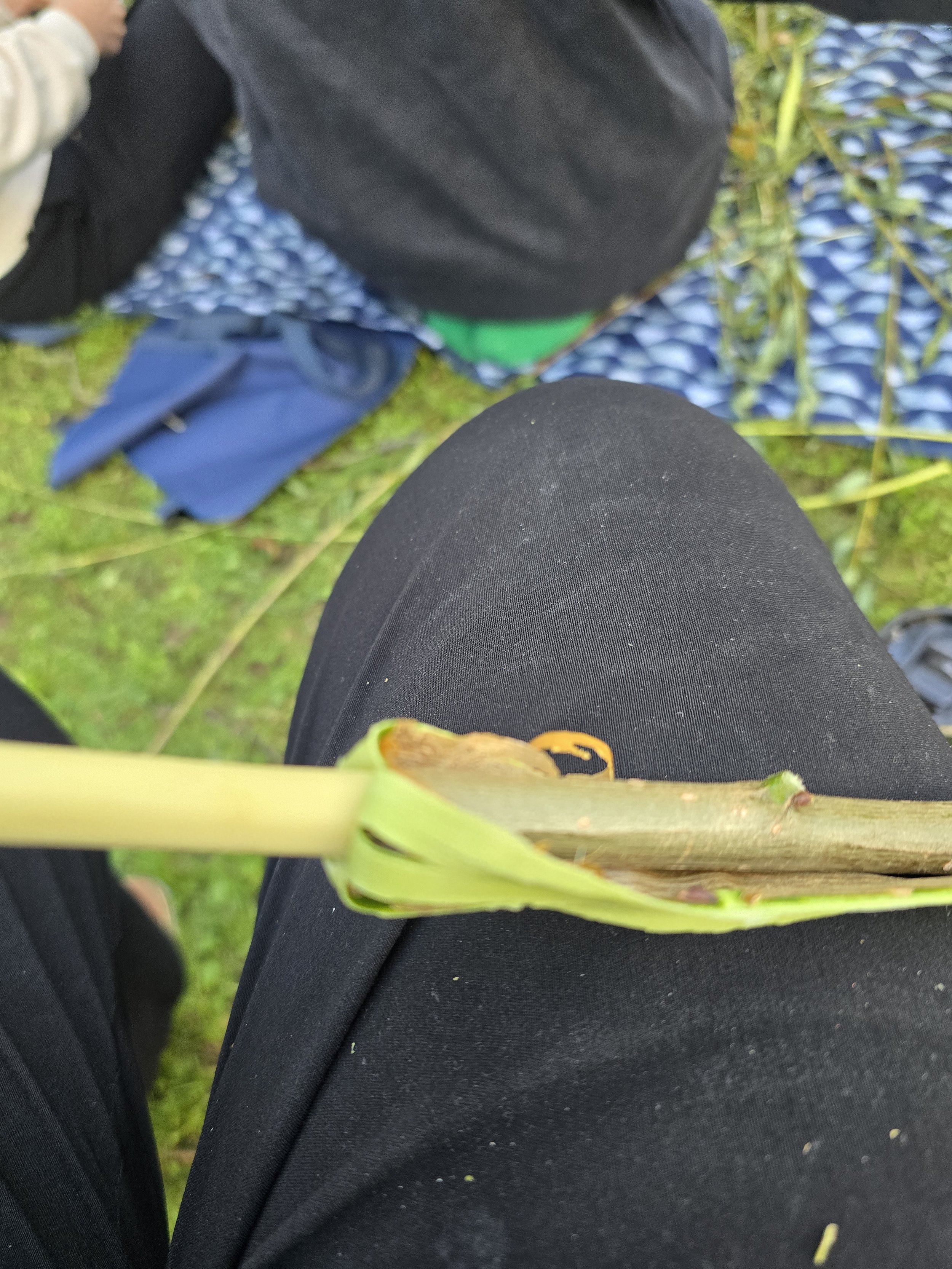
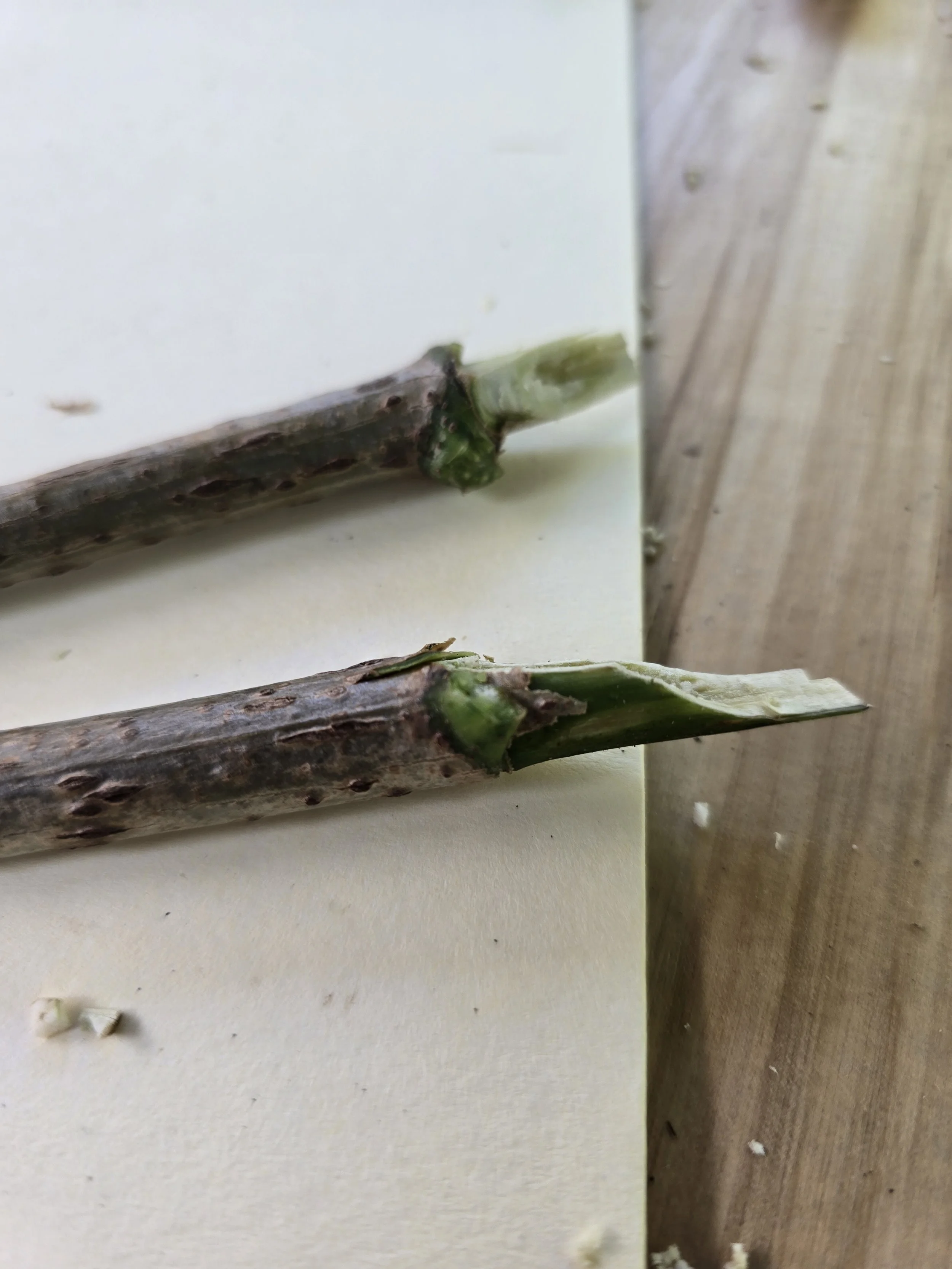
While we waited for the charcoal to be created (fire without oxygen) we made some alder pens. I had tried making dip pens previously but not been very successful. I discovered you need to make a 45 ° cut about 2 cm from a node and then further refine the shape and cuts, removing the soft inner core.
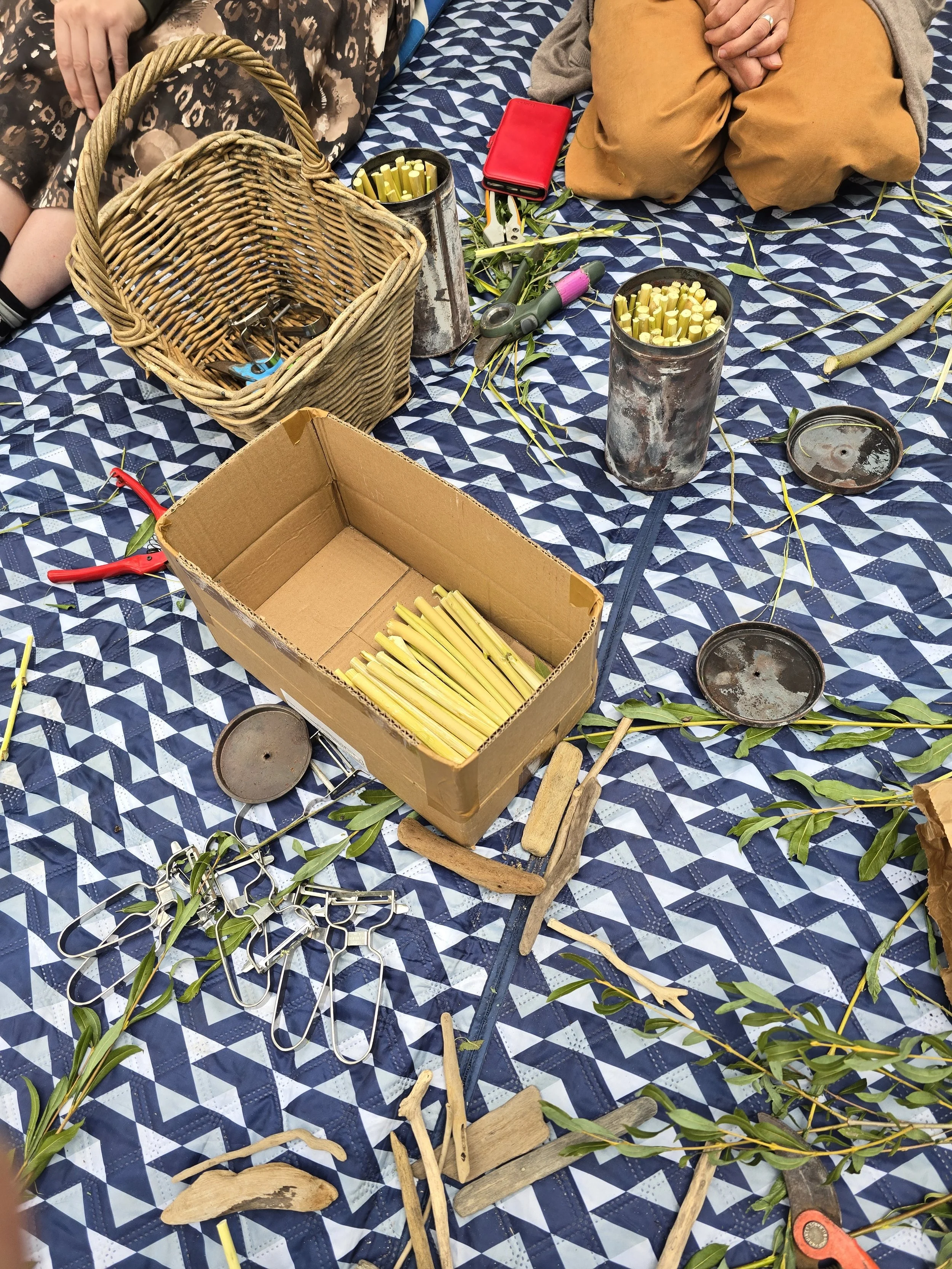
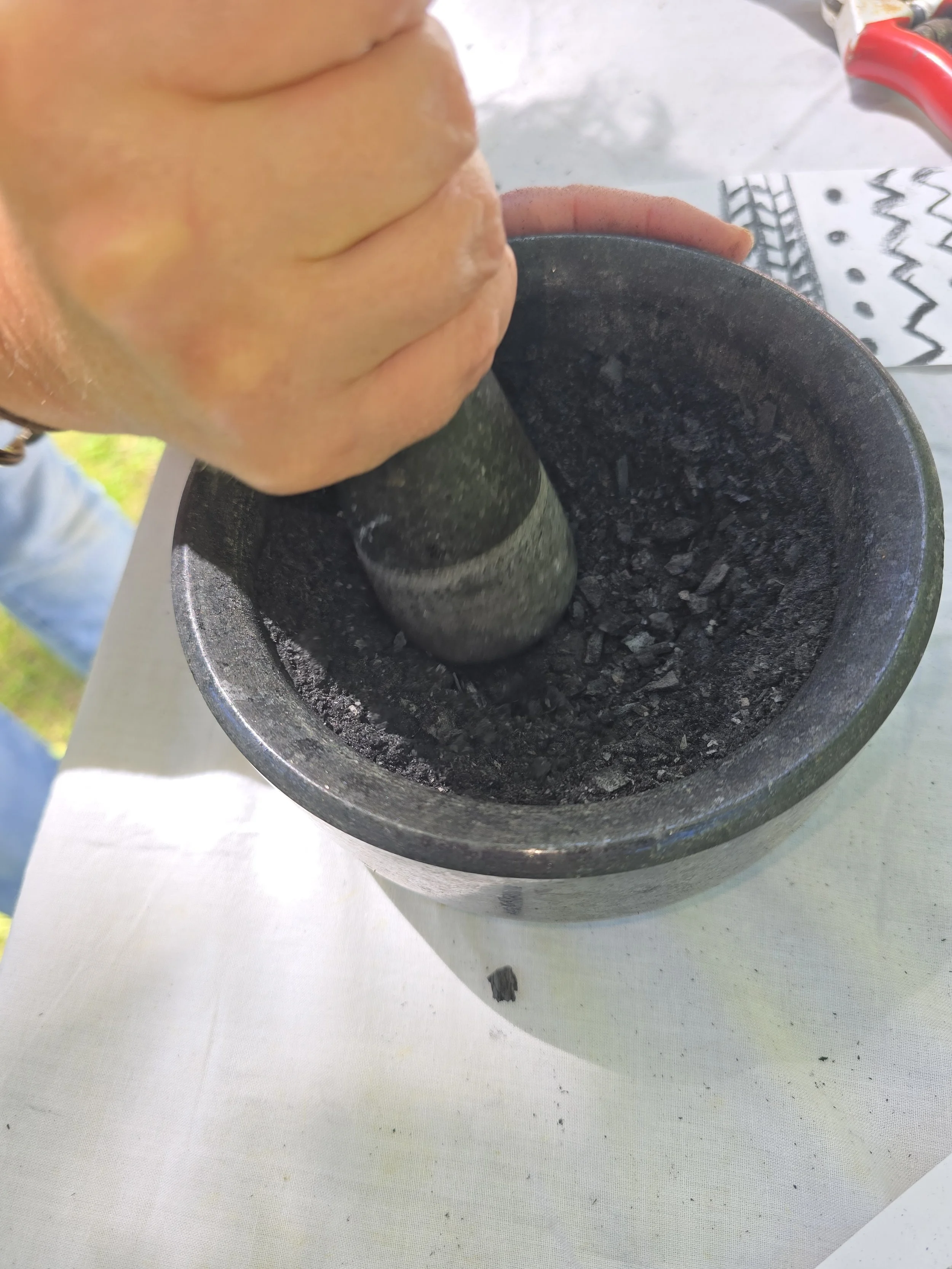
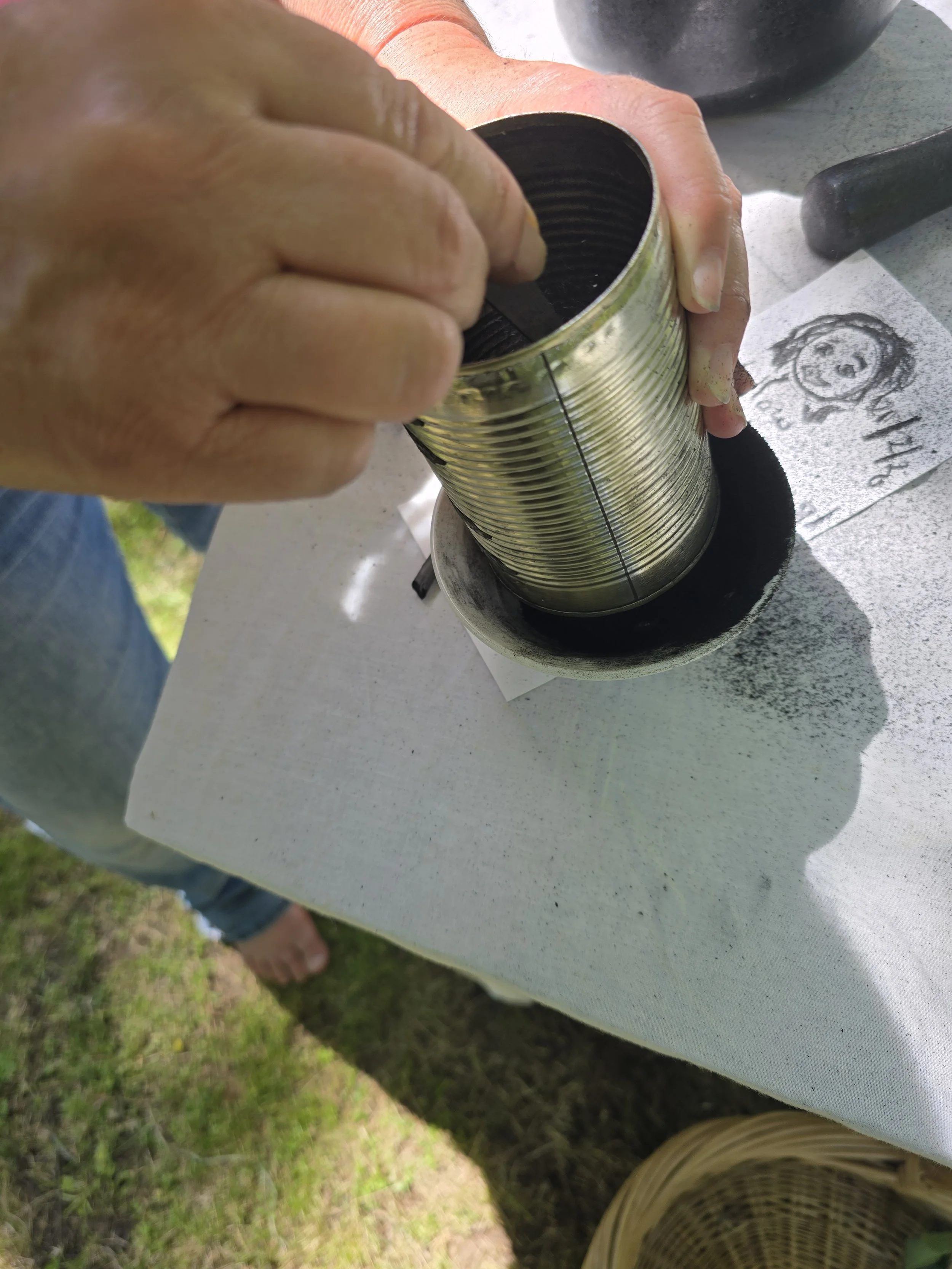
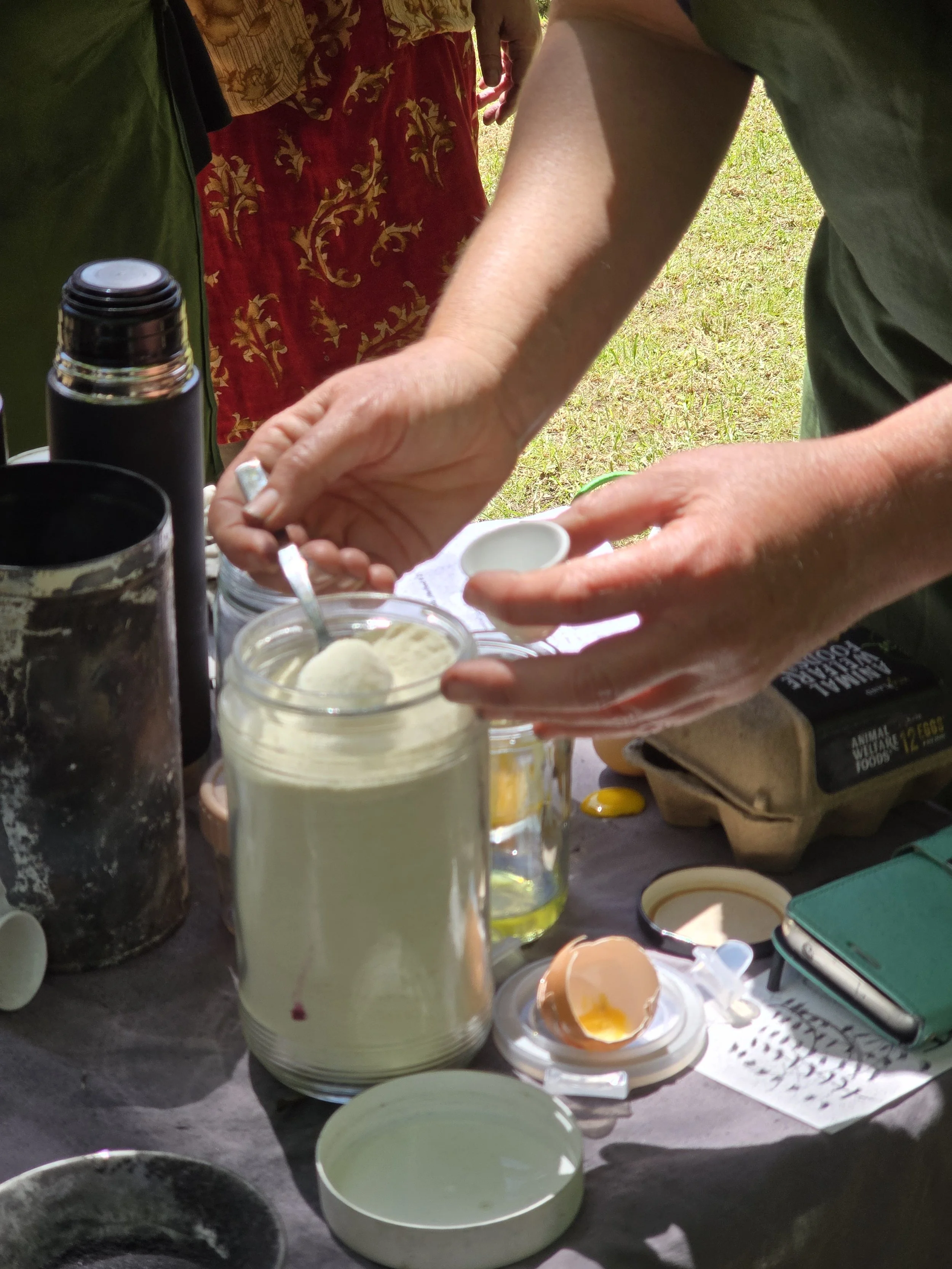
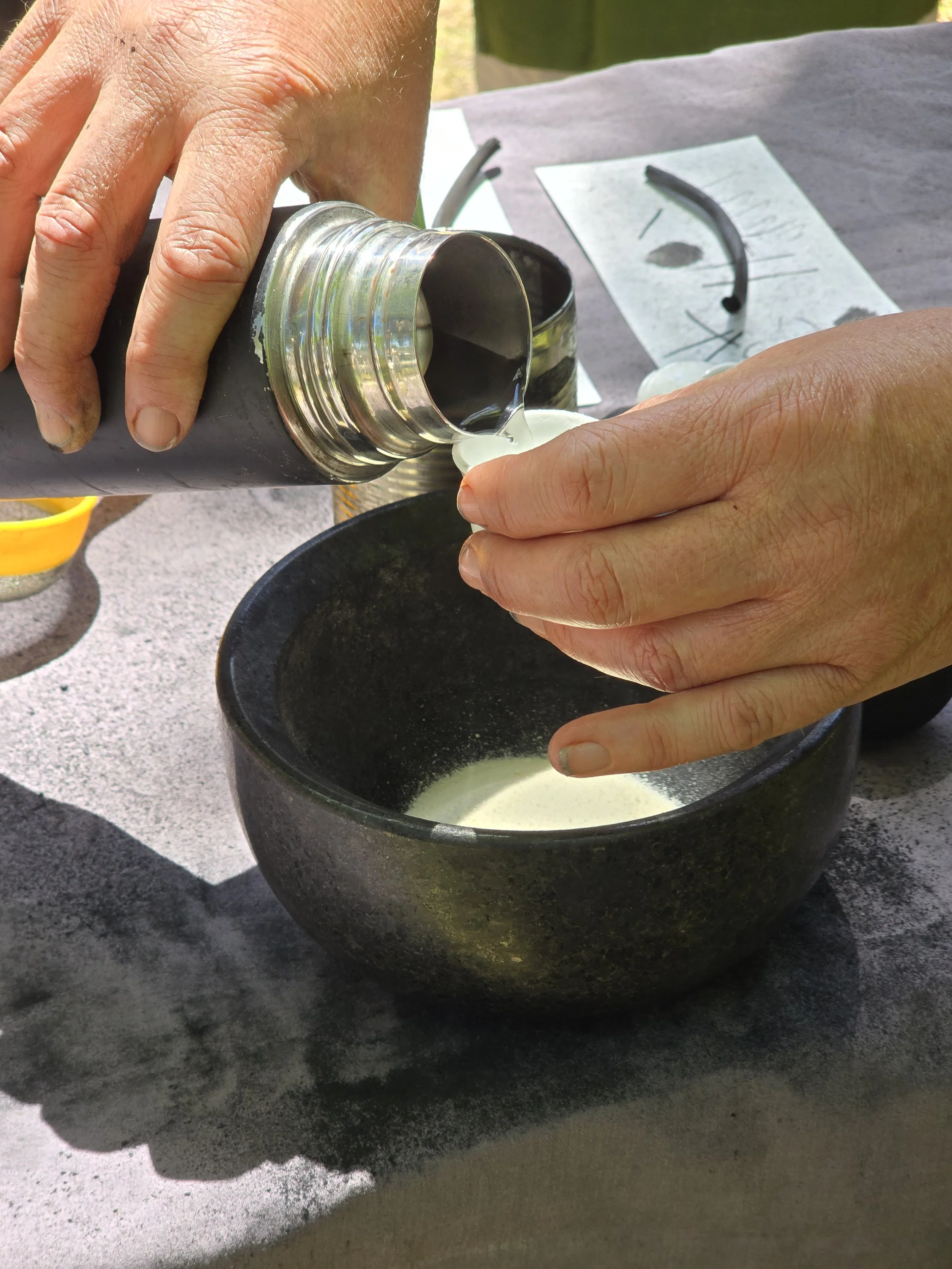
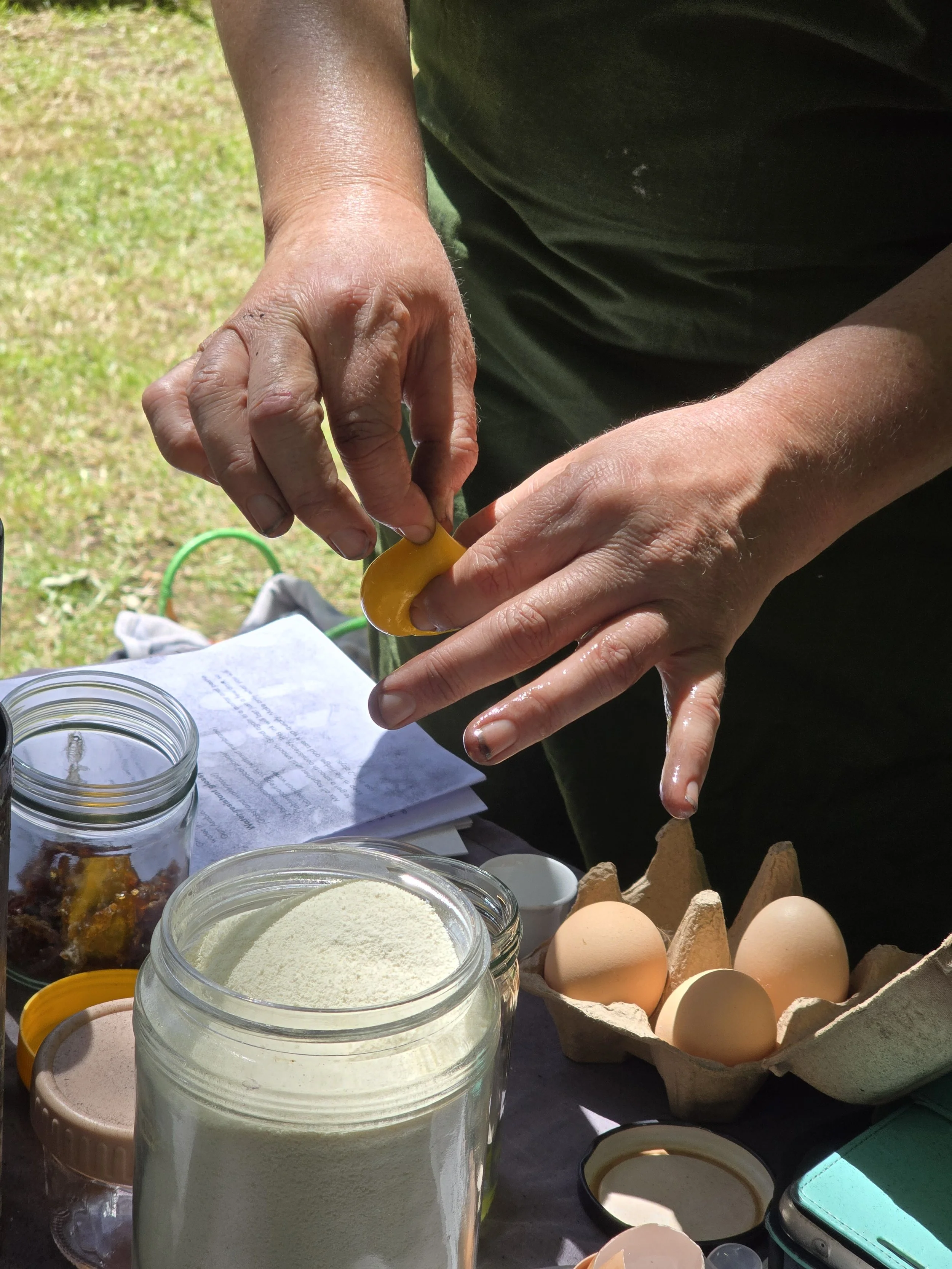
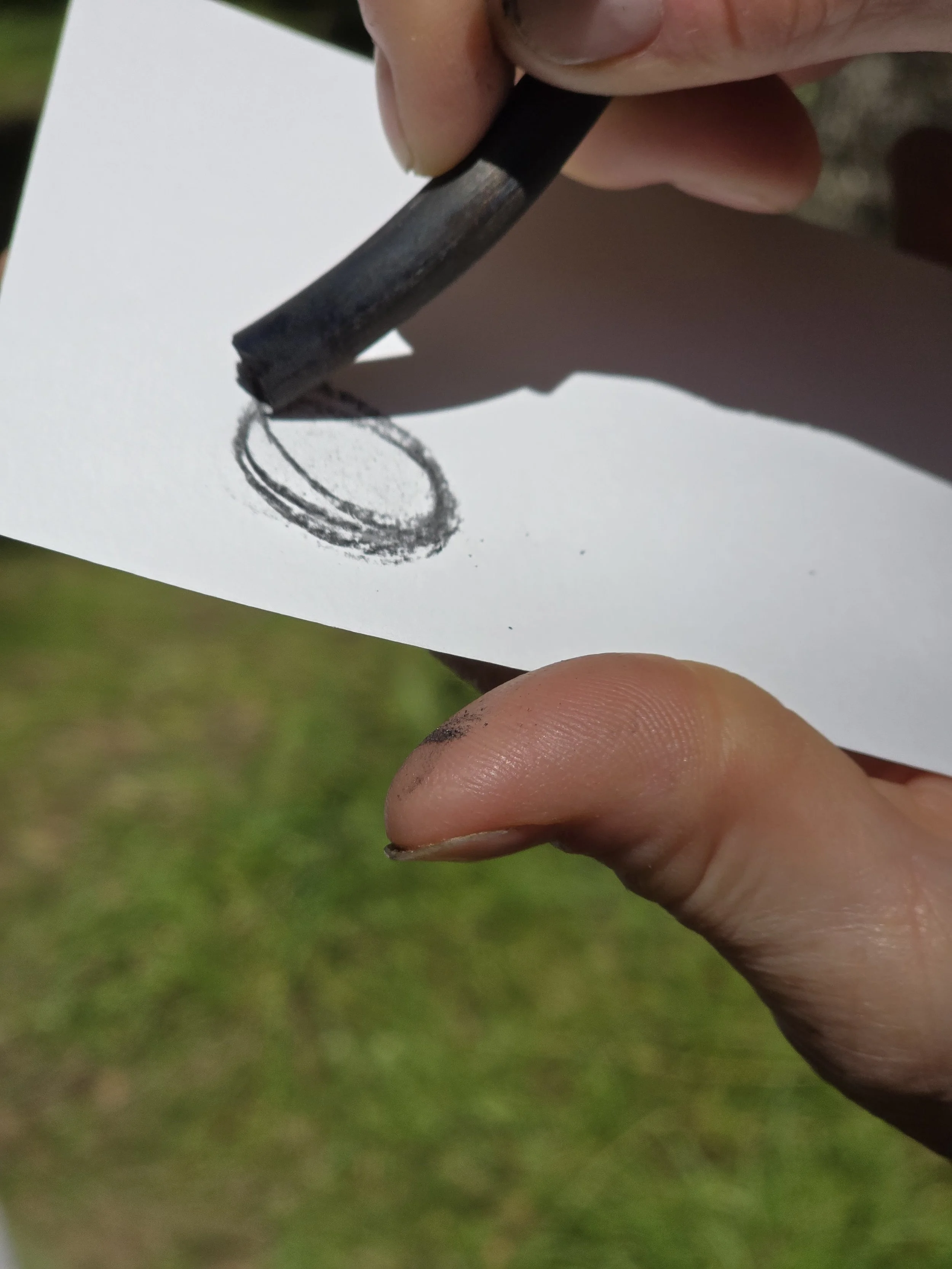
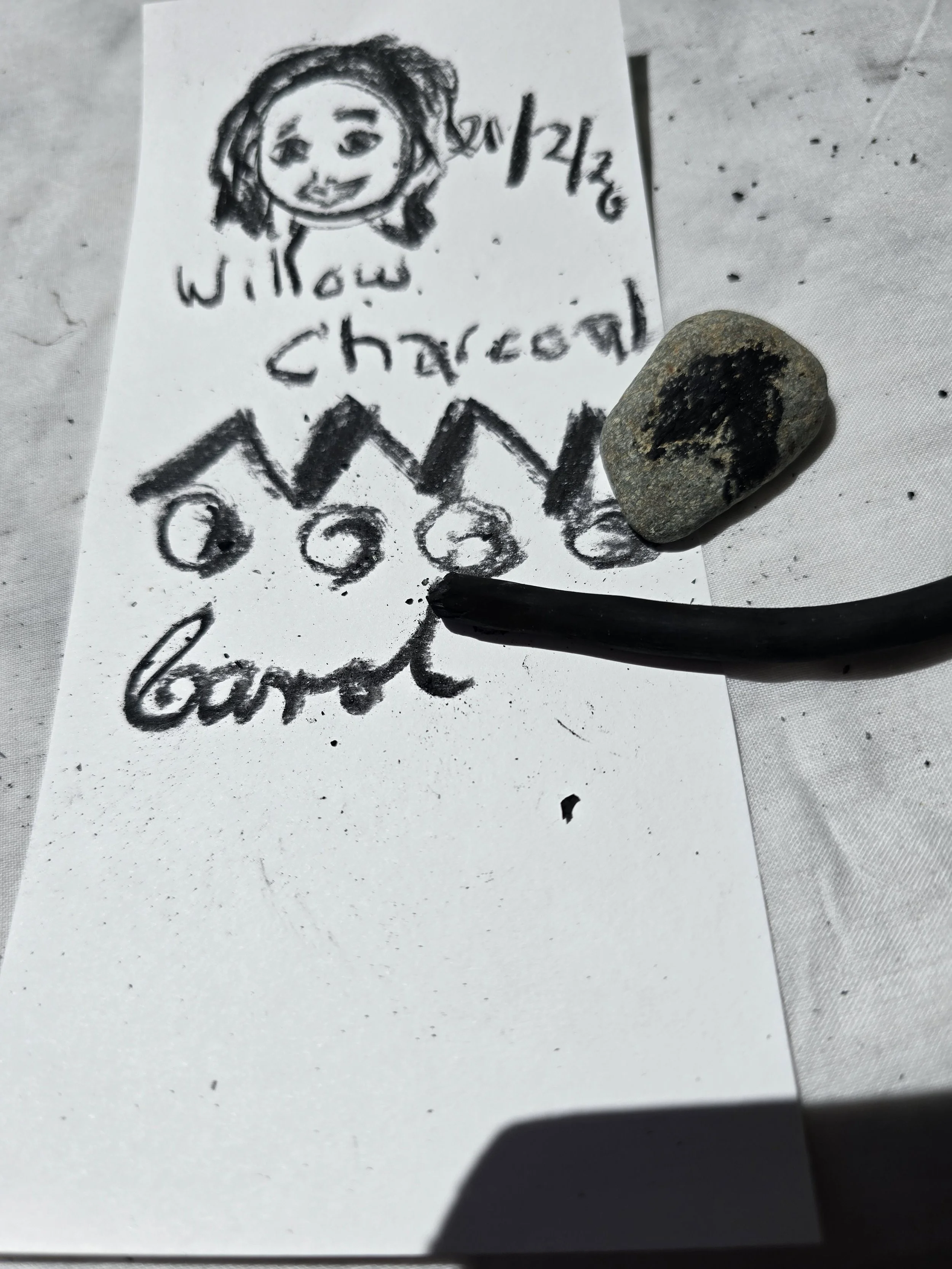
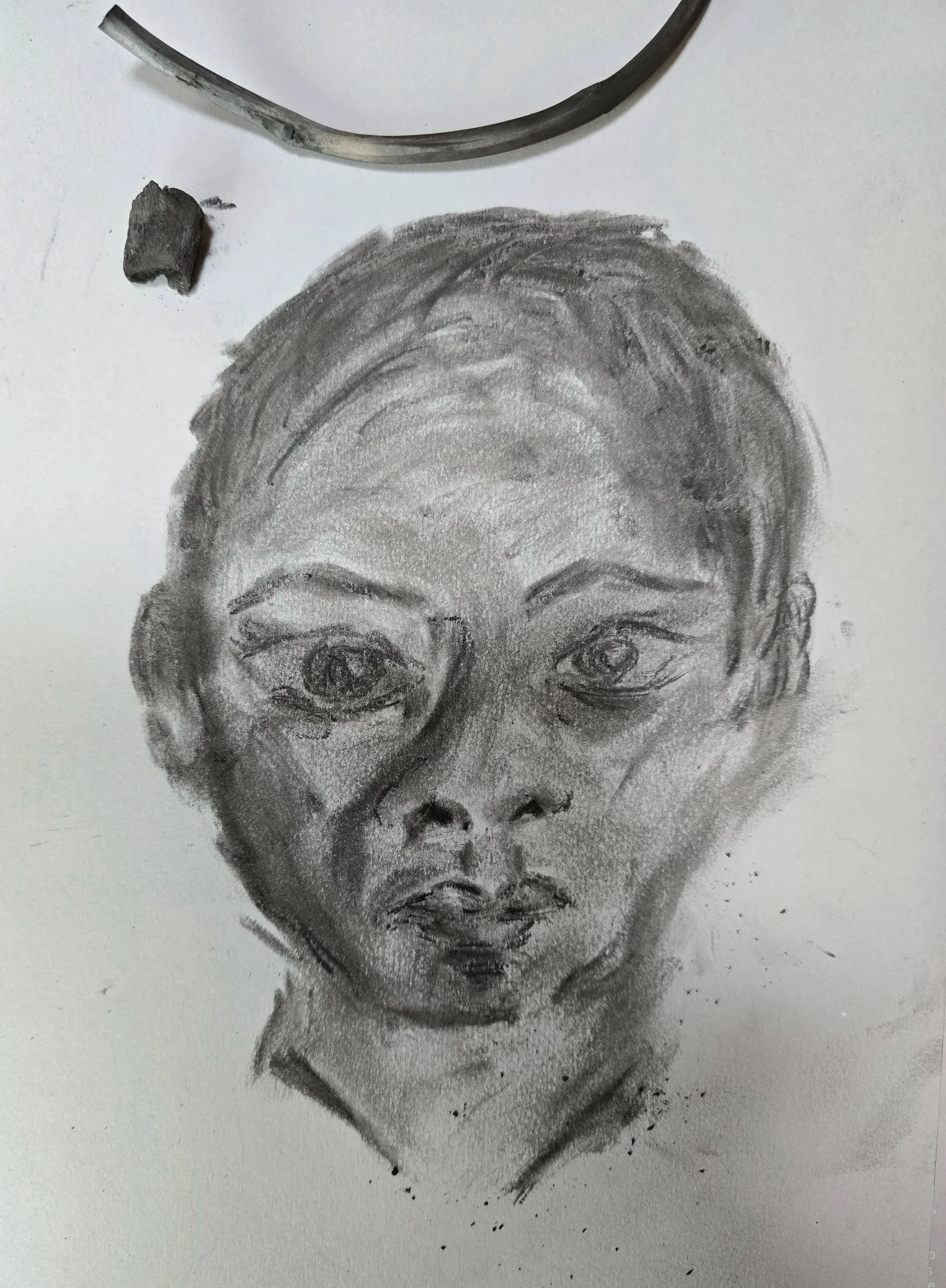
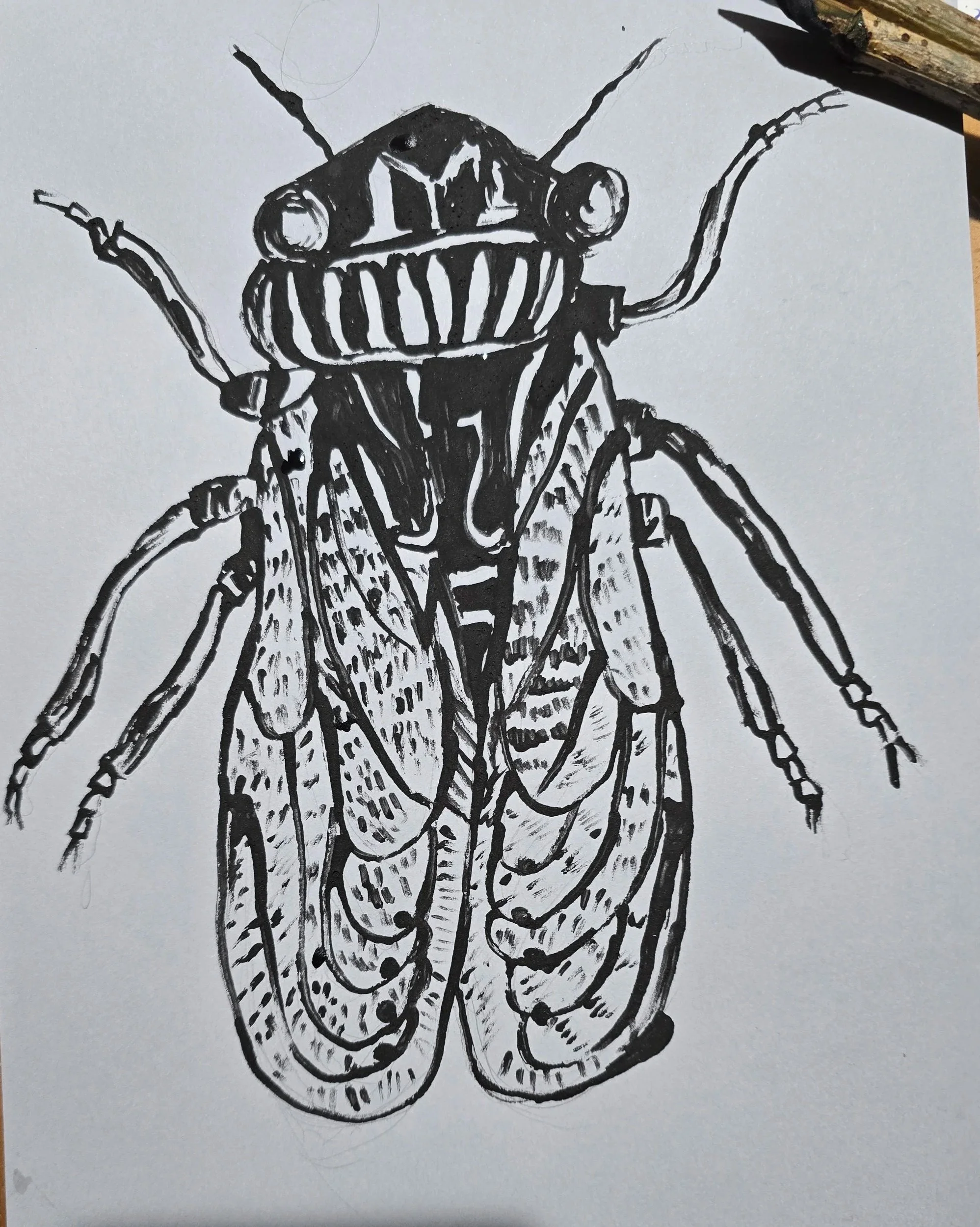
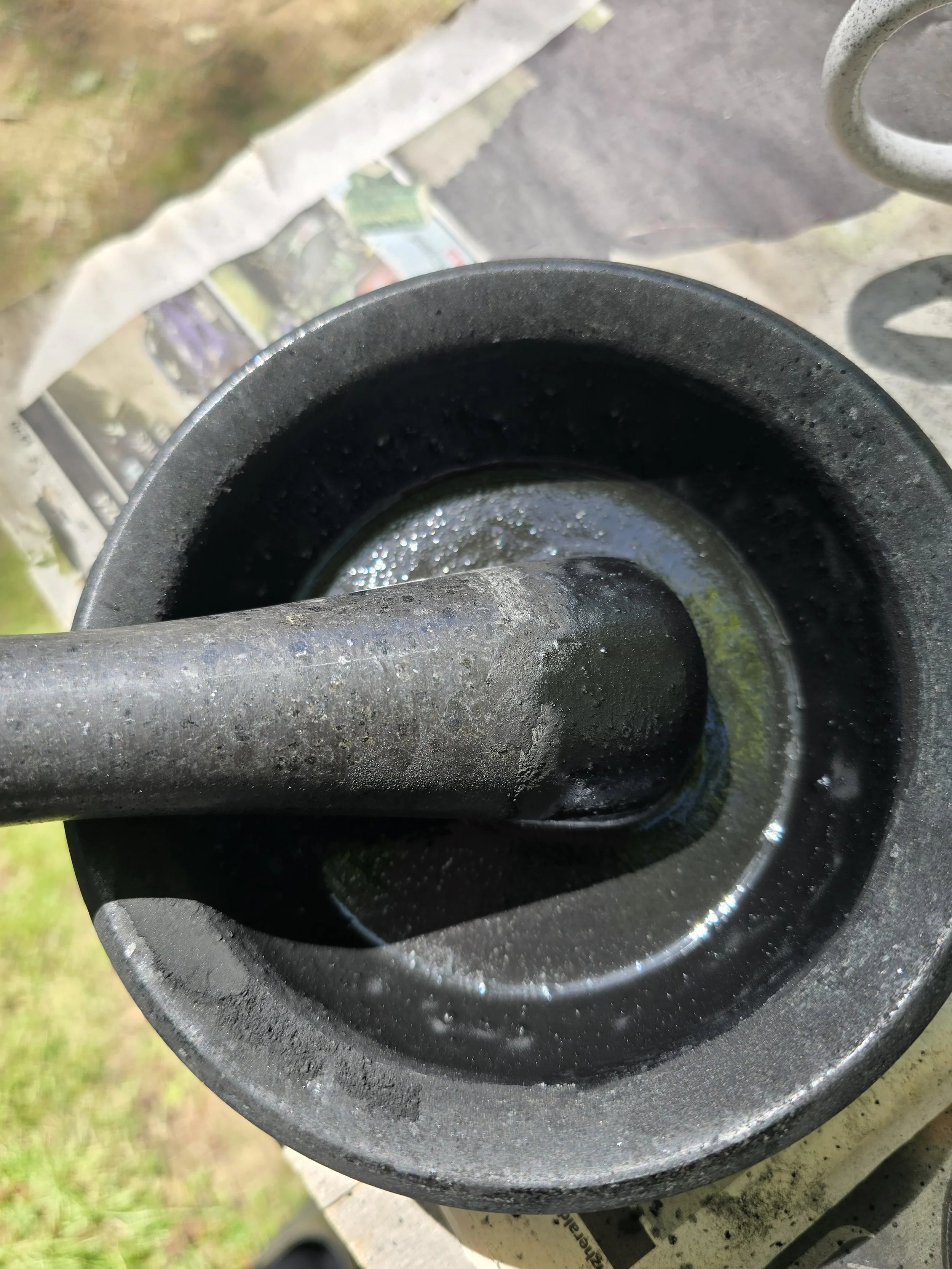
The gallery photos below show the process. Gathered twigs, peeled, the peeled twigs stacked into upright tins so they cannot warp or move around too much, Into the fire to create the charcoal, the charcoal made from the driftwood to create ink. More twigs to make pens showing the angle of the initial cut so the node acts as an ink reservoir, grinding the driftwood charcoal pieces, sifting the charcoal to remove any lumps that would continue to be ground, adding gum arabic powder to make the ink smooth to write with, and then water. Making egg tempera where just the yolk is added to the charcoal not the membrane around the yolk. Egg tempera only keeps for a few days in ink form before it goes bad and smells but once dried on the paper it gives a lovely glossy finish. The last pictures in the gallery show examples of using the charcoal both as an ink with the dip pen and as a drawing medium. It can be smudged and create shadows and highlights like commercial charcoal. Smudge proof charcoal can be made by plunging a piece of charcoal into molten wax. It then becomes a crayon that is smudge proof and waterproof but cannot be manipulated for drawing in the same way that dry charcoal is. I have heard if you coat the paper with gesso you can then wipe away excess charcoal to create highlights but I have not tried this yet. The final image of the cicada is quick drawing using charcoal ink with the gum arabic added