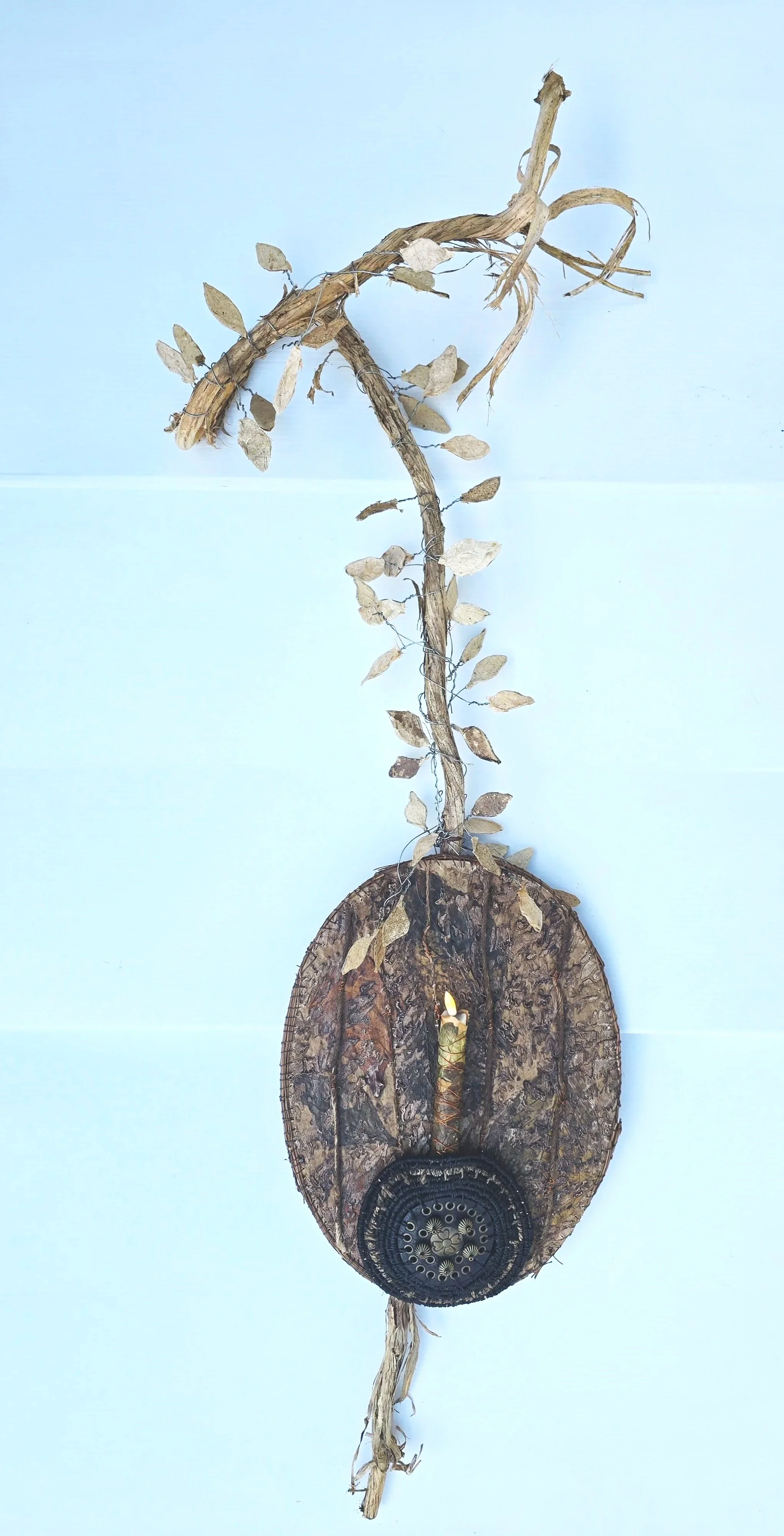
Take Two Final Project for Lissa Hunter’s online Course
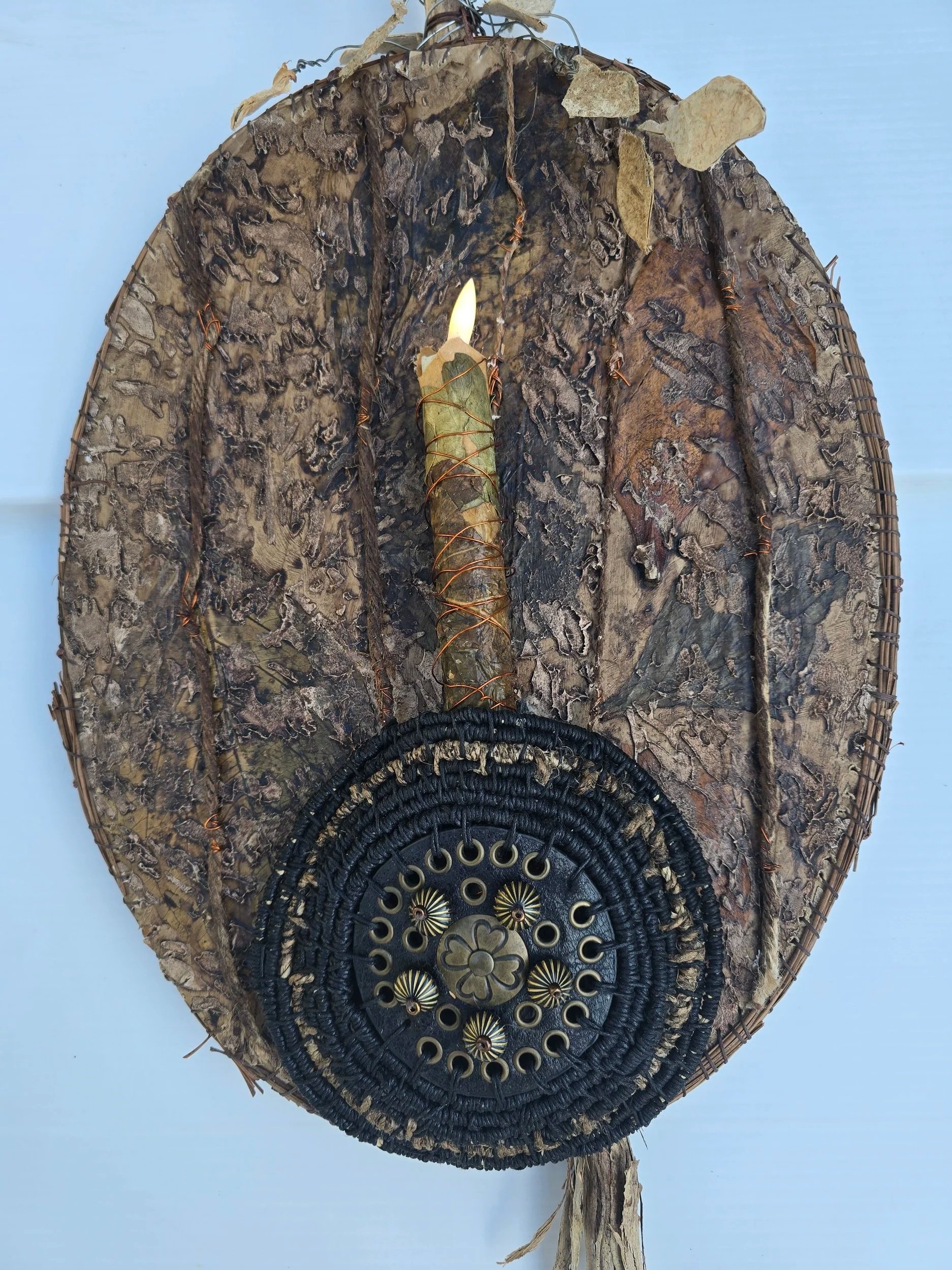
The Theme for this project was Let there be Light. This was originally a trial piece working with paper collage on a coiled place mat. I added teabags, some preserved leaves (preserved in a glycerine and water mix) and then used a white texture paste through a organic stencil. At that stage it looked terrible and I almost binned it. But then I decided to persevere and I painted it with some of my home made walnut ink. The change was dramatic. I continued to add the string with the copper twists and repainted with the ink. I was starting to get quite excited by this stage so I tidied up the edges by using pine needles around the perimeter. The black candle holder is part of an old belt that I coiled around and added beads in the middle. This was stitched on three quarter of the way round to that the battery operated candle could be inserted at the top.
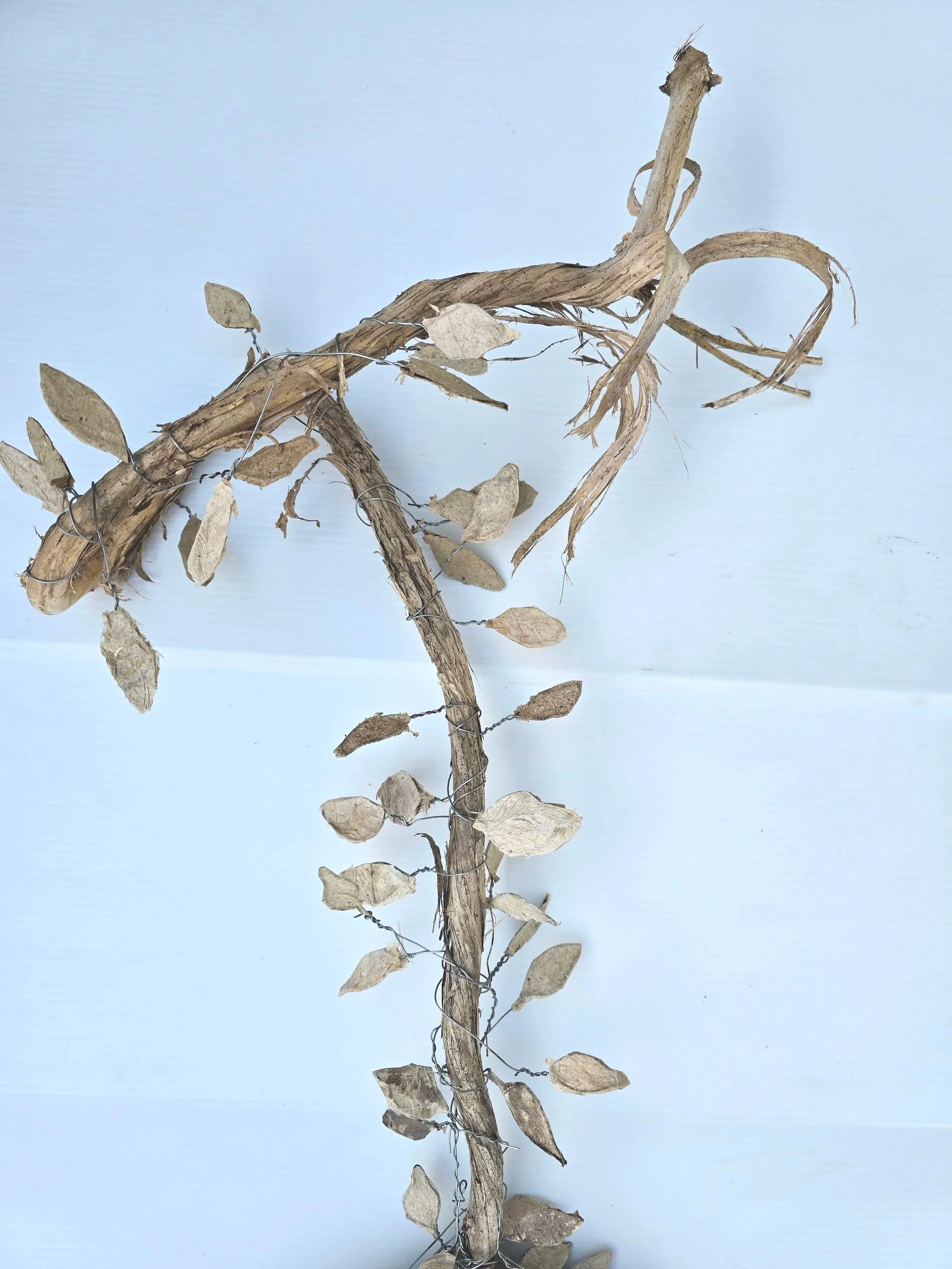
The shield piece was then attached to an old vine from a Japanese honeysuckle that I had sprayed in my garden some time back. The birds bring these seeds in and they become quite rampant so I often have to look at getting rid of them. If I can use their vines in my art work, that is a bonus. To integrate the pieces I created a number of soft wire skeletons with a leaf shape at the end. The leaves are made from hand made paper using corn husks as the base.. These were then coiled onto the vine at the top.
The candle was collaged in a similar way to the placemat and bound in thin copper wire. For safety a battery operated candle was used.
Coiling is a Slow Meditative Process
Take Two Art offered an online course with Lissa Hunter. Lissa is a well known coiling artist in the States who has taken coiling way past the basic process of making a basket into an altered art form. She is the producer of the 100 spoons exhibition shown above. In addition to that she has promoted the changing of the coiled surface by applying various surface techniques including collaged papers, paint and looping.
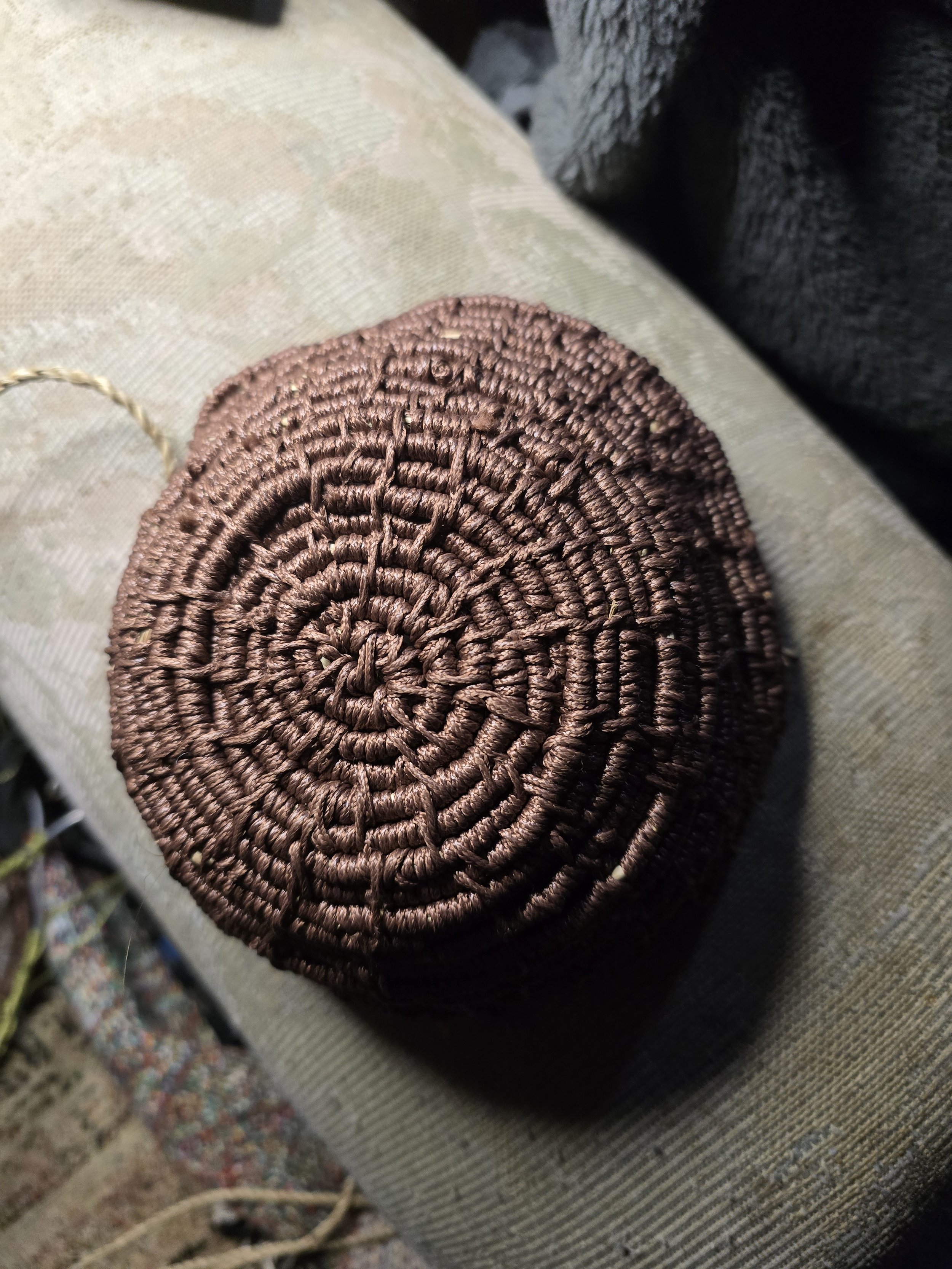
The process is slow and meticulous. Akin to weaving it anchors the maker in the present as the winding of the inner coil proceeds slowly to extend its form to a 3 D item.
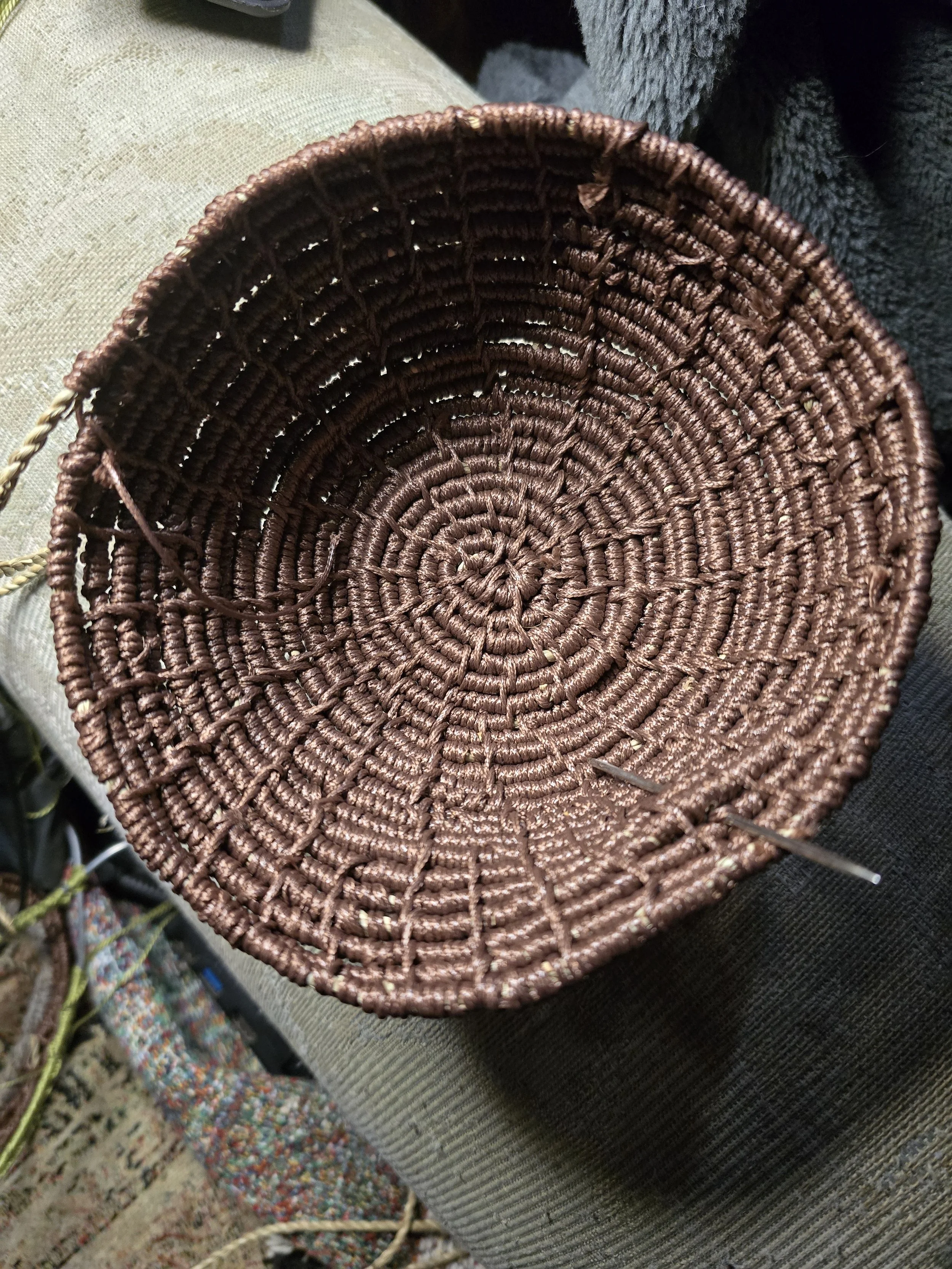
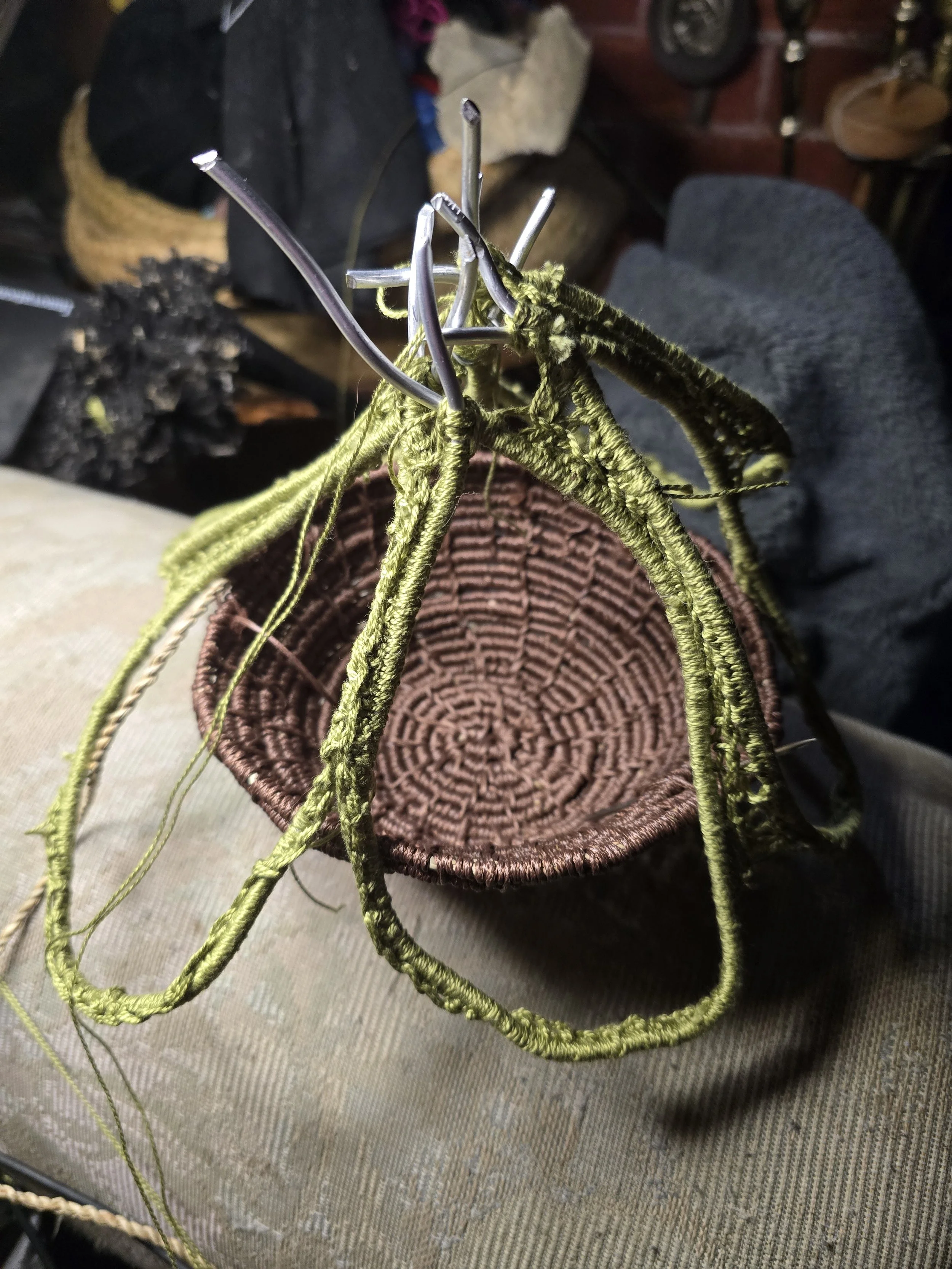
I used a seagrass core which was probably a bit thin and a bit soft but the result was still OK. To shape the coil place the wound core slightly outside the previous row. To go straight have the coil exactly on top of the previous row and to move inward (like the neck of a bottle), place the coil slightly to the inside of the core. It will take several rows of coil to alter the shape as this needs to be done in a gradual manner. I found about 8-10 coils of the polyester waxed thread I was using around the seagrass and then I need to stich into the previous row. I tried to keep my stich downs neat and in line but there was some variances as I shaped the form.
This form will be the bottom of a reliquary that will have a lift off top.

What is my current Textile Focus
My interest in textile art is wide and varied. My focus at the moment is on completing panels for my scholarship project Parallels in Maori and Celtic customs and art. I am currently working on a Tromp L’oeil piece that represents the Winter solstice coming through a gap in the hills that was important to both cultures in mapping their seasonal world. the centre piece is hand embroidered and now I am trying to complete the effect of adding small pieces fabrics to create the effect I am looking for